Quick answer
Diplopia, or double vision, is seeing two images of a single object. It may be monocular (present in one eye alone) or binocular (only when both eyes are open, resolving when one is covered). Binocular double vision is almost always caused by misaligned eyes — a squint — and is the type Mr Mohyudin most commonly assesses and treats.
What is Diplopia (Double Vision)?
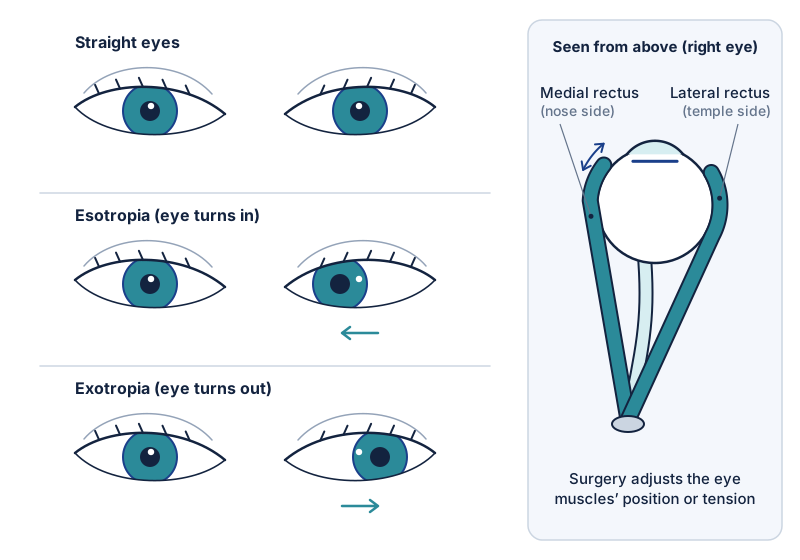
Diplopia — commonly called double vision — occurs when the two eyes fail to work together to produce a single, fused image. The brain receives two slightly misaligned images and cannot suppress one of them. It may be monocular (affecting one eye only, persisting when the other eye is closed) or binocular (affecting both eyes together, resolving when one eye is covered). Binocular diplopia is almost always caused by a misalignment of the eyes — a squint (strabismus) — and is the type most commonly assessed and treated by Mr Mohyudin.
What are the symptoms of Diplopia (Double Vision)?
- Two images of the same object, side by side, diagonally placed, or one above the other
- Symptoms that resolve when one eye is closed (binocular diplopia)
- Head tilting or turning to find a position that reduces double vision
- Difficulty reading, driving, or judging distances
- Associated eyelid drooping (ptosis), which may suggest a neurological cause
- Eye pain or headache in some cases
What causes Diplopia (Double Vision)?
- Strabismus (squint) — the most common cause of binocular diplopia; may be childhood-onset or acquired in adulthood
- Thyroid eye disease (Graves' orbitopathy) — inflammation and fibrosis of the extraocular muscles
- Third, fourth, or sixth cranial nerve palsy — may result from diabetes, hypertension, aneurysm, or tumour
- Myasthenia gravis — neuromuscular junction disorder causing variable, fatigable diplopia
- Orbital trauma — blow-out fracture entrapping an extraocular muscle
- Cataract or corneal irregularity — typically causes monocular diplopia
- Decompensated phoria — a previously well-controlled latent squint breaking down under stress or illness
How is Diplopia (Double Vision) diagnosed?
Assessment includes cover/uncover and alternate cover tests to measure the angle of deviation, Hess chart and Lees screen to identify which muscle is restricted, prism bar measurement, and dilated fundus examination. Neuroimaging (MRI brain and orbits) is arranged urgently when a vascular or compressive cause is suspected. Blood tests including thyroid function and acetylcholine receptor antibodies where appropriate.
How is Diplopia (Double Vision) treated?
Management depends on the underlying cause. Fresnel prisms applied to spectacles can provide temporary relief while the cause is investigated or while waiting for surgery. Botulinum toxin injection to an overacting muscle may help in selected cases. Squint surgery to realign the eyes is the definitive treatment for stable, longstanding diplopia due to strabismus. Mr Mohyudin specialises in strabismus surgery in both adults and children, including complex cases with restricted ocular motility.
Squint SurgeryHow is this managed in Yorkshire?
Binocular double vision is a core part of Mr Mohyudin’s strabismus practice at Spire Elland (01422 324000) and Newmedica (01274 940 519). Sudden diplopia still belongs at Huddersfield Royal Infirmary eye casualty first (01484 342000).
Frequently asked questions
What is the difference between monocular and binocular double vision?
Monocular diplopia persists when the other eye is covered and usually points to a problem within one eye, such as cataract or corneal irregularity. Binocular diplopia disappears when either eye is covered and indicates a misalignment of the eyes. The distinction guides which investigations are needed.
What causes binocular double vision?
The most common cause is a squint (strabismus), which may be long-standing or newly acquired. Other causes include thyroid eye disease, cranial nerve palsies (which can follow diabetes or high blood pressure), myasthenia gravis, and orbital trauma. New-onset double vision should be assessed promptly.
How is double vision treated?
Treatment depends on the cause. Fresnel prisms on spectacles can relieve double vision temporarily while the cause is investigated. Botulinum toxin helps in selected cases. For stable, long-standing diplopia due to strabismus, squint surgery to realign the eyes is the definitive treatment.
Should I cover one eye while I wait?
If covering one eye abolishes the second image, a temporary patch or fogging lens can make walking safer for a short time. It is not treatment. You still need the cause found, particularly if the double vision is new.
Book a Consultation
Ask Spire Elland Hospital about current private consultation availability. A GP referral is not required for self-pay.
Book at Spire Elland ↗ Call 01422 324000Prompt assessment recommended
Related conditions
Self-Assessment Tool
Not sure if you need to be seen? Take our symptom checker.
Start self-assessment →