Quick answer
Amblyopia, commonly called lazy eye, is reduced vision in one eye caused by abnormal visual development during childhood, when the brain favours the stronger eye and suppresses the weaker one. It is the most common cause of preventable visual impairment in children, affecting around 2 to 3 per cent of the population.
What is Amblyopia (Lazy Eye)?
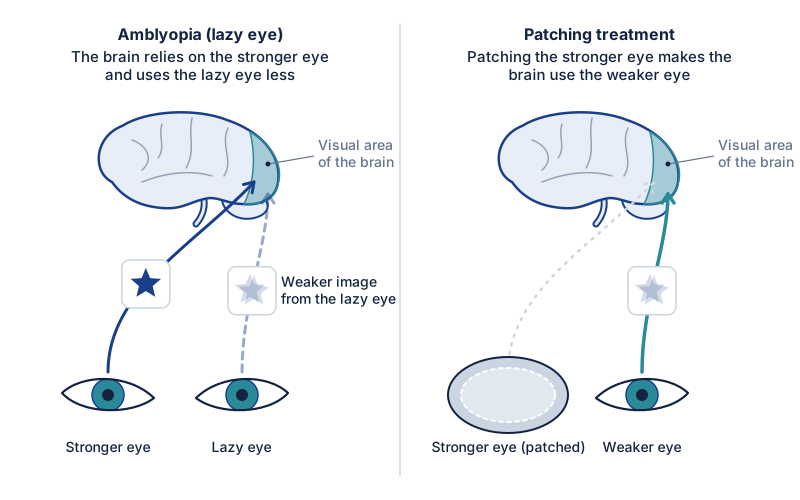
Amblyopia, commonly called lazy eye, occurs when vision in one eye does not develop normally during childhood. The brain begins to favour the stronger eye and suppresses signals from the weaker one. It is the most common cause of preventable visual impairment in children, affecting approximately 2–3% of the population. Early diagnosis and treatment — before the visual system matures around age 7–8 — gives the best chance of full recovery.
What are the symptoms of Amblyopia (Lazy Eye)?
- Reduced vision in one eye (often discovered at school screening)
- An eye that appears to turn in, out, or upward (may indicate an underlying squint)
- Squinting, closing one eye in bright light, or tilting the head
- Difficulty with depth perception
- Poor performance on vision tests that test each eye separately
What causes Amblyopia (Lazy Eye)?
- Strabismus (squint) — the most common cause; the brain ignores the misaligned eye to avoid double vision
- Refractive error difference between the two eyes (anisometropia) — one eye is significantly more short- or long-sighted
- Deprivation amblyopia — a condition blocking vision in one eye, such as a congenital cataract or severe ptosis
How is Amblyopia (Lazy Eye) diagnosed?
A full orthoptic and ophthalmic examination, including refraction (measuring glasses prescription) and vision testing of each eye separately. Younger children are assessed using age-appropriate vision tests, prism cover tests and cycloplegic refraction.
How is Amblyopia (Lazy Eye) treated?
Treatment depends on the underlying cause and must begin as early as possible. Glasses are prescribed to correct any refractive error. Patching the stronger eye (occlusion therapy) forces the brain to use the amblyopic eye and rebuild the neural connections. Atropine penalisation (blurring the better eye with drops) is an alternative to patching. Where a structural cause is present (cataract, ptosis, squint), surgery may be required first.
Paediatric OphthalmologyHow is this managed in Yorkshire?
Mr Mohyudin’s paediatric clinics at Spire Elland and Newmedica work with orthoptic-style assessment. NHS orthoptics remains an excellent first service; private care is for access, not a different biology.
Frequently asked questions
Can amblyopia be treated in adults?
Treatment is most effective in young children while the visual system is still developing. Some improvement is possible in older children and occasionally in adults, but results are less predictable, which is why early screening matters.
What happens if amblyopia is not treated?
The weaker eye may never develop good vision, which can limit depth perception and cause problems if the stronger eye is injured later in life. Early treatment gives the best chance of useful vision in both eyes.
What are the signs of amblyopia in a child?
Signs include reduced vision in one eye (often found at school screening), an eye that appears to turn in, out or upward, squinting or closing one eye in bright light, head tilting, difficulty with depth perception, and poor performance on vision tests assessing each eye separately.
What causes amblyopia?
The most common cause is strabismus (squint), where the brain ignores the misaligned eye to avoid double vision. It can also result from a significant refractive error difference between the two eyes (anisometropia), or deprivation amblyopia from a condition such as a congenital cataract or severe ptosis.
How is amblyopia treated?
Treatment depends on the cause and should begin as early as possible. Glasses correct any refractive error. Patching the stronger eye (occlusion therapy) forces the brain to use the amblyopic eye, with atropine drops an alternative. Where a structural cause exists, such as cataract or squint, surgery may be required first.
Book a Consultation
Ask Spire Elland Hospital about current private consultation availability. A GP referral is not required for self-pay.
Book at Spire Elland ↗ Call 01422 324000Prompt assessment recommended
Related conditions
Self-Assessment Tool
Not sure if you need to be seen? Take our symptom checker.
Start self-assessment →