 Reviewed by Mr Mohamed Mohyudin Consultant Ophthalmic Surgeon · FRCOphth · GMC 7039600 · double fellowship trained
 Quick answer
Blepharoplasty is surgery to remove excess skin, muscle or fat from the upper or lower eyelids, for functional (visual field) or aesthetic reasons. Mr Mohyudin, an oculoplastic specialist, performs upper-lid surgery under local anaesthetic as a day case. Bruising and swelling typically settle within 10 to 14 days.
Key facts at a glance
- From £3,000 (self-pay, Spire Elland)
- Upper and lower eyelid surgery, functional and aesthetic
- Upper-lid surgery under local anaesthetic as a day case
- Bruising and swelling settle in around 10 to 14 days
- Return to office work usually after 10 to 14 days
- May be NHS-funded when a visual field test confirms restriction
Upper Eyelid Blepharoplasty
Removes excess skin (and sometimes muscle) from the upper eyelids. When the skin is hooding the visual axis, this is a functional procedure — it genuinely improves the upper visual field. When vision is unaffected, it is an aesthetic procedure to restore a more rested, open appearance.
NHS funding: available when a formal visual field test confirms significant superior field restriction. Private surgery is the alternative for patients who do not meet the NHS threshold.
Lower Eyelid Surgery
Addresses fat pad prolapse (under-eye bags) and excess lower lid skin. The approach can be transconjunctival (no external scar) or external (scar placed just below the lash line) depending on whether skin removal is required.
The Procedure & Anaesthetic
Upper blepharoplasty is performed under local anaesthetic as a day case — you are awake and comfortable throughout. Lower blepharoplasty may use local anaesthetic with sedation. Both are day procedures; you go home the same day.
Recovery
- Bruising and swelling: 10–14 days. Cold packs for the first 48 hours.
- Suture removal at 5–7 days.
- Return to office work: approximately 10–14 days.
- Avoid strenuous exercise and eye makeup for 2 weeks.
- Full cosmetic result visible at 3–6 months.
Frequently Asked Questions
Is blepharoplasty cosmetic or medical?
It can be both. When excess upper lid skin blocks vision, insurers or health systems may class it as functional. Purely cosmetic cases are usually self-funded, depending on local rules and assessment.
How is blepharoplasty different from ptosis surgery?
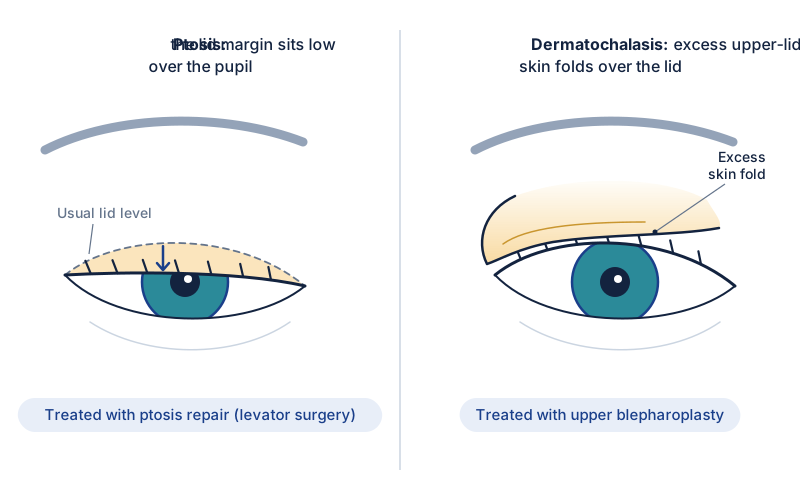
Blepharoplasty removes excess skin and fat. Ptosis surgery tightens the levator muscle when the lid itself droops. Some people need one or both procedures; examination shows which applies.
How long does swelling last after blepharoplasty?
Most obvious swelling and bruising settle within one to two weeks, though subtle refinement can continue for several months.
How long does blepharoplasty recovery take?
Bruising and swelling typically resolve within 10–14 days — most patients feel comfortable returning to office work after 10–14 days. The final cosmetic result, once any residual swelling has fully settled, is usually visible at 3–6 months. Cold packs in the first 48 hours and avoiding strenuous activity for 2 weeks help speed recovery.
Is blepharoplasty available on the NHS?
Upper eyelid blepharoplasty may be funded by the NHS if a formal visual field test confirms that excess skin is significantly restricting the upper visual field. Lower eyelid surgery and purely cosmetic upper lid surgery are not available on the NHS. Mr Mohyudin performs both NHS (where criteria are met) and private blepharoplasty.
How much does eyelid surgery cost in Yorkshire?
Private upper blepharoplasty at Spire Elland Hospital starts from £3,000 for both upper lids. Lower lid surgery and combined upper and lower procedures are priced individually after consultation. The procedure is covered by most major UK insurers including Bupa (Fee-Assured), AXA Health, Aviva and Vitality where a functional indication is established.
Will I be awake during blepharoplasty?
Upper eyelid blepharoplasty is routinely performed under local anaesthetic as a day case — you are awake and comfortable throughout. Lower eyelid blepharoplasty may be performed under local anaesthetic with sedation depending on the complexity. You go home the same day in both cases.
Will the scars be visible after eyelid surgery?
Upper lid incisions are placed in the natural eyelid crease and heal extremely well — they are typically invisible when the eye is open. Lower lid incisions, when required, are placed just below the lash line; an internal (transconjunctival) approach leaves no external scar at all. Mr Mohyudin will explain which technique is appropriate for you at consultation.
How long do the results of blepharoplasty last?
Upper eyelid blepharoplasty results are long-lasting — most patients do not require a repeat procedure. However, the ageing process continues, so some skin laxity may return over many years. Lower lid surgery for fat pads (bags) is generally permanent at the treated site.
Explore this treatment in more depth
Sources & patient information
Page updated . Prepare your appointment checklist →