 Reviewed by Mr Mohamed Mohyudin Consultant Ophthalmic Surgeon · FRCOphth · GMC 7039600 · double fellowship trained
 Quick answer
Cataract surgery replaces the eye's cloudy natural lens with a clear artificial intraocular lens (IOL). Mr Mohyudin performs it under local anaesthetic in around 15 to 20 minutes per eye, as a day case at Spire Elland Hospital. Private surgery can usually be arranged within 2 to 4 weeks, with no GP referral required.
Key facts at a glance
- From £3,000 per eye (self-pay, Spire Elland)
- Around 15 to 20 minutes per eye under local anaesthetic
- Private surgery typically within 2 to 4 weeks; no GP referral
- Choice of monofocal, toric and multifocal or EDOF lenses
- Over 5,000 cataract operations performed by Mr Mohyudin
- Most patients notice improved vision within 24 to 48 hours
What happens during cataract surgery?
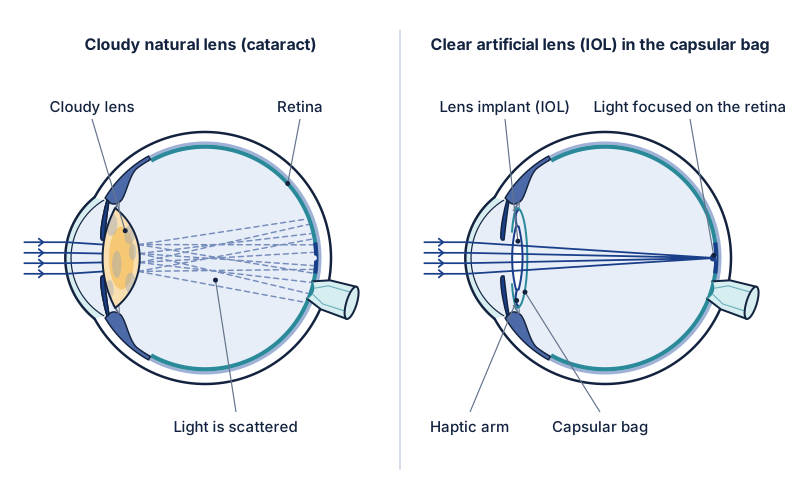
The operation is performed under local anaesthetic and takes approximately 15–20 minutes per eye. A tiny incision is made, the cloudy lens is broken up using ultrasound (phacoemulsification), and a bespoke intraocular lens (IOL) is inserted. You are awake throughout but completely comfortable. Most people go home the same day.
Which intraocular lens should you choose?
Private cataract surgery allows the selection of premium IOLs tailored to your lifestyle and vision goals. A monofocal IOL corrects distance vision, so reading glasses are still required. A toric IOL also treats astigmatism. Multifocal and EDOF lenses aim for a range of focus, with optical trade-offs such as night halos that Mr Mohyudin will discuss with you. No lens guarantees spectacle independence.
How does NHS cataract surgery compare with private care?
NHS waiting times depend on the hospital, clinical priority and stage of the pathway. Check current hospital information and ask your own team for an estimate. Ask the hospital for current private appointment and surgery availability after assessment. No GP referral is required. The operation itself is the same class of surgery; the differences we will state are access, continuity, and lens options the NHS in this region does not routinely fund.
Beyond faster access, private surgery offers:
- Premium lens choice — toric, multifocal and EDOF IOLs, not available as standard on the NHS
- Advanced biometry — more detailed pre-operative measurements for higher precision lens power calculation
- Date of your choosing — no waiting list; surgery scheduled around your commitments
- Continuity of care — Mr Mohyudin performs your operation and conducts all follow-up appointments personally
How long does recovery take?
Most patients notice improved vision within 24–48 hours. Avoid rubbing the eye and use the prescribed drops as directed. Driving can usually resume once vision in the operated eye meets the DVLA standard, typically within days to weeks. Strenuous exercise and swimming should be avoided for 4 weeks. A full personal plan is given at discharge.
Humanitarian cataract surgery in Pakistan
Alongside Yorkshire NHS and private lists, Mr Mohyudin performs humanitarian cataract surgery in Karachi and Islamabad for World Aid Network, a UK charity funding sight-restoring eye surgery in Pakistan, Indonesia and Malaysia. The Pakistan eye-surgery programme funds complete cataract operations at partner hospitals. That work is charitable and is not a private booking pathway at Spire Elland.
Frequently Asked Questions
Can cataracts be cured without surgery?
No. No eye drops or medicines are proven to reverse cataracts. Surgery to replace the cloudy lens is currently the only effective treatment.
How quickly do cataracts get worse?
Most cataracts progress slowly over months or years, but the speed varies between people and can be faster with diabetes.
Am I awake during cataract surgery?
Usually yes. It is most often done under local anaesthetic while you are awake but the eye is numb, and the operation typically takes around 15 minutes.
How long is the NHS waiting time for cataract surgery in Yorkshire?
NHS waiting times vary by provider, treatment and clinical priority; check the current hospital estimate. Private cataract surgery with Mr Mohyudin at Spire Elland Hospital can typically be arranged within 2–4 weeks of your first consultation — with no GP referral required.
What is the difference between NHS and private cataract surgery?
NHS cataract surgery provides a standard monofocal intraocular lens. Private cataract surgery with Mr Mohyudin offers the full range of premium lenses (toric, multifocal, EDOF), more detailed pre-operative biometry, a date of your choosing, and personal continuity of care.
How soon can I have private cataract surgery with Mr Mohyudin at Spire Elland?
Most patients are seen for an initial consultation within 1–2 weeks, with surgery arranged 2–4 weeks after that. The total pathway from first contact to procedure is typically under 6 weeks.
Does cataract surgery hurt?
No. Cataract surgery is performed under local anaesthetic so you feel no pain during the procedure. You are awake throughout and aware of light and movement, but the operation is entirely painless.
Does Mr Mohyudin perform cataract surgery outside the UK?
Yes. He performs humanitarian cataract surgery in Karachi and Islamabad, Pakistan, for World Aid Network (worldaidnetwork.org). That charitable work is separate from private cataract lists at Spire Elland Hospital.
Will I need glasses after cataract surgery?
This depends on the intraocular lens chosen. A standard monofocal lens corrects one distance; reading glasses are still required. Premium multifocal or EDOF lenses aim to provide functional vision at multiple distances, significantly reducing dependence on glasses.
Explore this treatment in more depth
Sources & patient information
Page updated . Prepare your appointment checklist →