Quick answer
Retinal detachment is a sight-threatening emergency in which the light-sensitive retina separates from the back of the eye. Warning signs are a sudden increase in floaters, flashes of light, and a dark shadow or curtain spreading across the vision. Anyone with these symptoms needs same-day ophthalmology assessment, as prompt surgery gives the best outcome.
What is Retinal Detachment?
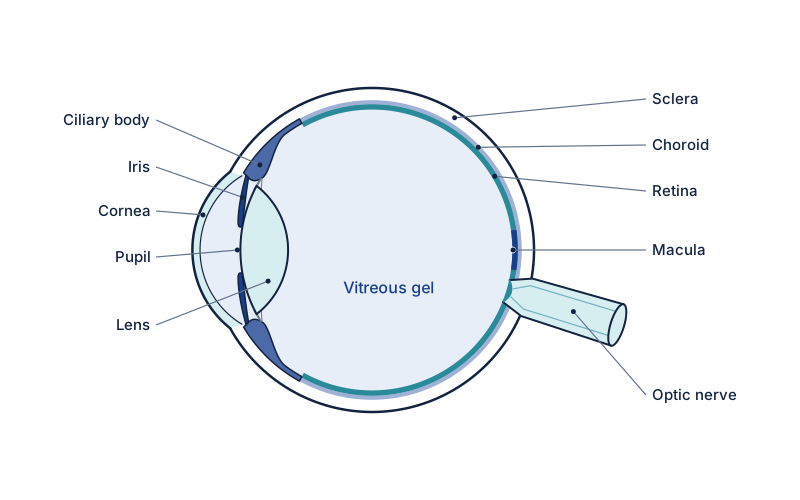
Retinal detachment occurs when the retina — the light-sensitive layer at the back of the eye — separates from the underlying retinal pigment epithelium (RPE). Without urgent surgical reattachment, the detached retina loses its blood supply and photoreceptors die irreversibly. Retinal detachment is a medical emergency. Any patient experiencing a sudden onset of floaters, flashes of light, or a shadow or curtain across their vision should seek same-day ophthalmology assessment.
What are the symptoms of Retinal Detachment?
- Sudden appearance of new floaters (dark spots, cobwebs, rings)
- Flashes of light (photopsia), particularly at the edge of vision
- A dark shadow or curtain advancing across the visual field
- Sudden, painless reduction in vision
- Distorted or wavy central vision if the macula is involved
What causes Retinal Detachment?
- Rhegmatogenous — a retinal tear or hole allows fluid to track beneath the retina; more common in myopia (short-sightedness) and after cataract surgery
- Tractional — fibrous membranes pull the retina away; associated with proliferative diabetic retinopathy and sickle cell disease
- Exudative — fluid accumulates beneath an intact retina due to inflammation, tumour or vascular disease
How is Retinal Detachment diagnosed?
Urgent dilated fundus examination. B-scan ultrasound if the view is obscured. This is an ocular emergency requiring same-day assessment.
How is Retinal Detachment treated?
Retinal tears without detachment are treated prophylactically with laser retinopexy or cryotherapy. Retinal detachment requires surgery: pneumatic retinopexy (gas injection), scleral buckling, or pars plana vitrectomy. The approach depends on the extent and location of the detachment. Outcomes are significantly better when surgery is performed before the macula detaches.
How is this managed in Yorkshire?
Huddersfield Royal Infirmary eye casualty: 01484 342000. Mr Mohyudin does not perform detachment surgery. After the retina is treated, later cataract or eyelid work can return here.
Frequently asked questions
Is retinal laser treatment painful?
Numbing drops make the procedure tolerable for most people. You may feel brief stinging or pressure, and see flashes of light, but it is not usually painful.
How effective is laser for a retinal tear?
Laser around a retinal tear creates scar tissue that welds the retina to the wall of the eye, greatly reducing the risk of detachment. It is a well-established and effective treatment when done promptly.
What are the warning signs of retinal detachment?
The key warning signs are a sudden shower of new floaters, flashes of light at the edge of vision, and a dark shadow or curtain moving across the visual field, sometimes with sudden painless loss of vision. Any of these needs urgent, same-day ophthalmology assessment.
Is retinal detachment an emergency?
Yes. Retinal detachment is an ocular emergency. Without prompt surgical reattachment the detached retina loses its blood supply and vision can be permanently lost. Outcomes are significantly better when surgery is performed before the central macula detaches, so same-day assessment is essential.
How is retinal detachment treated?
Retinal tears without detachment can be sealed with laser or cryotherapy. An established detachment requires surgery — pneumatic retinopexy, scleral buckling, or vitrectomy — depending on its extent and location. The aim is to reattach the retina and preserve as much vision as possible.
Book a Consultation
Ask Spire Elland Hospital about current private consultation availability. A GP referral is not required for self-pay.
Book at Spire Elland ↗ Call 01422 324000Urgent — seek same-day care
Go to Eye Casualty (Huddersfield Royal Infirmary) or call NHS 111 now.
Related conditions
Self-Assessment Tool
Not sure if you need to be seen? Take our symptom checker.
Start self-assessment →