Quick answer
Ptosis is a drooping of the upper eyelid below its normal position, ranging from mild to severe where the lid covers the pupil. In adults it can obstruct the upper visual field and cause a tired appearance; in children it must be treated urgently to prevent amblyopia. Oculoplastic surgery is highly effective at correcting it.
What is Ptosis (Drooping Eyelid)?
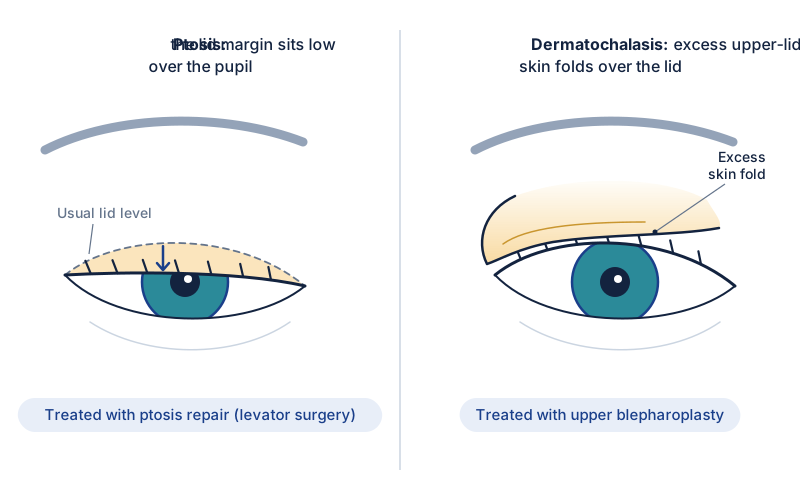
Ptosis is a drooping of the upper eyelid below its normal position. It ranges from mild (barely noticeable) to severe (the lid covers the pupil completely). In children, severe ptosis must be treated urgently to prevent amblyopia (lazy eye). In adults, ptosis may cause visual field obstruction, a tired or asymmetric facial appearance, and the need to tilt the head back or raise the eyebrows to see clearly. Oculoplastic surgery is highly effective at correcting ptosis.
What are the symptoms of Ptosis (Drooping Eyelid)?
- One or both upper eyelids drooping lower than normal
- Reduced or obstructed upper visual field
- Compensatory chin-up head posture or brow raising
- Fatigue of the eye on prolonged upward gaze
- In children — amblyopia, astigmatism, or head turn
What causes Ptosis (Drooping Eyelid)?
- Aponeurotic ptosis — age-related dehiscence of the levator aponeurosis; the most common cause in adults
- Congenital ptosis — deficient development of the levator muscle, present from birth
- Mechanical ptosis — weight of an eyelid lesion (tumour, chalazion, dermatochalasis)
- Neurogenic ptosis — Horner syndrome, third nerve palsy
- Myogenic ptosis — myasthenia gravis, chronic progressive external ophthalmoplegia
- Trauma or previous eyelid surgery
How is Ptosis (Drooping Eyelid) diagnosed?
Clinical assessment including measurement of margin reflex distance (MRD1), levator function, and upper visual field testing. Systemic causes are excluded where indicated. In children, urgent assessment for amblyopia.
How is Ptosis (Drooping Eyelid) treated?
Surgical correction is the definitive treatment. Levator advancement is used for good levator function; frontalis sling (attaching the lid to the brow muscle) for poor levator function. NHS funding is available when formal visual field testing confirms significant superior field restriction. Private surgery provides the alternative for cosmetic correction or faster access.
Eyelid SurgeryHow is this managed in Yorkshire?
Private ptosis repair with Mr Mohyudin is at Spire Elland, typically under local anaesthetic, from £2,500 per lid (July 2026). Call 01422 324000. Full guide: the drooping-eyelid article.
Frequently asked questions
What causes a droopy eyelid?
Most droopy eyelids are due to age-related stretching of the eyelid muscle. Less commonly they are present from birth or linked to a nerve or muscle condition.
When is a droopy eyelid serious?
A sudden droop, especially with double vision, a severe headache, a changed pupil, or weakness, needs urgent assessment, as it can occasionally signal a serious underlying problem.
What causes a drooping eyelid?
The most common cause in adults is aponeurotic ptosis, an age-related loosening of the levator muscle attachment. Other causes include congenital ptosis present from birth, mechanical ptosis from the weight of an eyelid lesion, neurogenic causes such as Horner syndrome or third nerve palsy, myogenic conditions like myasthenia gravis, and trauma or previous eyelid surgery.
How is ptosis diagnosed?
Diagnosis involves a clinical assessment that measures the margin reflex distance (MRD1), levator muscle function, and the upper visual field. Where indicated, systemic causes are excluded. In children, urgent assessment for amblyopia (lazy eye) is carried out, as severe ptosis must be treated promptly to protect developing vision.
How is ptosis treated?
Surgical correction is the definitive treatment. Levator advancement is used when levator function is good, while a frontalis sling, attaching the lid to the brow muscle, is used when function is poor. NHS funding applies when visual field testing confirms significant superior field restriction; private surgery offers cosmetic correction or faster access.
Book a Consultation
Ask Spire Elland Hospital about current private consultation availability. A GP referral is not required for self-pay.
Book at Spire Elland ↗ Call 01422 324000Prompt assessment recommended
Related conditions
Self-Assessment Tool
Not sure if you need to be seen? Take our symptom checker.
Start self-assessment →