Quick answer
Presbyopia is a natural age-related change affecting virtually everyone from their mid-40s onwards, in which the crystalline lens inside the eye gradually loses flexibility and reduces the ability to focus on near objects. It is entirely normal and not a disease, but it affects reading and close work. Optical and surgical options can reduce reliance on reading glasses.
What is Presbyopia?
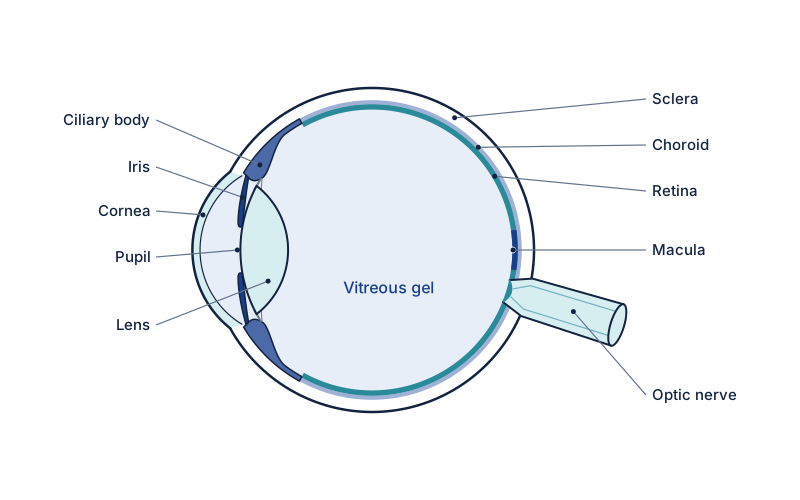
Presbyopia is a natural age-related change that affects virtually everyone from their mid-40s onwards. It occurs as the crystalline lens inside the eye gradually loses its flexibility, reducing the eye's ability to change focus between near and distant objects. Although it is entirely normal and not a disease, presbyopia can significantly affect daily life — particularly for reading, using a smartphone or working at a computer. Various optical and surgical options can reduce or eliminate the need for reading glasses.
What are the symptoms of Presbyopia?
- Difficulty reading small print at normal reading distance
- Need to hold books or menus further away to see them clearly
- Eye strain and headaches after prolonged reading or close work
- Needing brighter light for reading
- Difficulty with the transition from near to distance vision
What causes Presbyopia?
- Age-related loss of elasticity of the crystalline lens
- Reduced contractile ability of the ciliary muscle with age
- A universal change that begins in the 40s and progresses through the 50s
How is Presbyopia diagnosed?
Standard near vision testing and refraction assessment confirm presbyopia. The degree of near addition required is measured precisely.
How is Presbyopia treated?
Reading glasses are the simplest solution. Varifocal or bifocal lenses provide both distance and near correction in a single spectacle lens. Monovision contact lenses (one eye for distance, one for near) suit some patients. Surgical options include multifocal or extended depth-of-focus (EDOF) intraocular lenses at the time of cataract surgery or refractive lens exchange, which can significantly reduce spectacle dependence.
Cataract Surgery & Premium IOLsHow is this managed in Yorkshire?
Varifocals remain the default. Private cataract with EDOF or multifocal IOLs is a lens-choice decision with Mr Mohyudin at Spire Elland, not a lifestyle brand. Use the cataract lens helper on this site before you book a package.
Frequently asked questions
What are the main symptoms of presbyopia?
Common symptoms include difficulty reading small print at normal distance and needing to hold books or menus further away to see them clearly. Patients may also notice eye strain and headaches after prolonged close work, a need for brighter light when reading, and difficulty switching focus between near and distance vision.
Why does presbyopia happen as you get older?
Presbyopia occurs as the crystalline lens inside the eye gradually loses its elasticity with age, alongside reduced contractile ability of the ciliary muscle. This is a universal change that begins in the 40s and progresses through the 50s, reducing the eye's ability to change focus between near and distant objects.
How is presbyopia treated?
Reading glasses are the simplest solution, while varifocal or bifocal lenses provide both distance and near correction in one lens. Monovision contact lenses suit some patients. Surgical options include multifocal or extended depth-of-focus (EDOF) intraocular lenses at cataract surgery or refractive lens exchange, which can significantly reduce spectacle dependence.
Book a Consultation
Ask Spire Elland Hospital about current private consultation availability. A GP referral is not required for self-pay.
Book at Spire Elland ↗ Call 01422 324000Routine consultation suitable
Related conditions
Self-Assessment Tool
Not sure if you need to be seen? Take our symptom checker.
Start self-assessment →