Quick answer
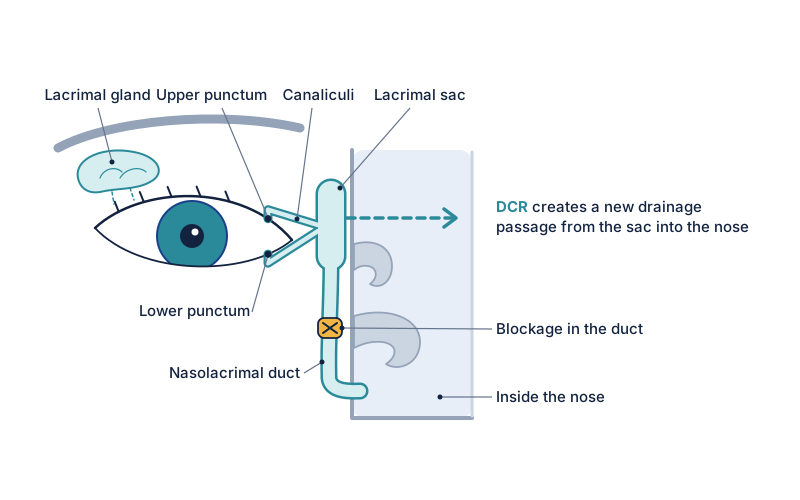
Nasolacrimal duct obstruction (a blocked tear duct) is a blockage of the channel that drains tears from the inner corner of each eye down into the nose. When blocked, tears overflow down the cheek (epiphora) and the eye may become sticky with discharge from secondary infection. It is congenital in babies or acquired in adults.
What is Nasolacrimal Duct Obstruction (Blocked Tear Duct)?
The nasolacrimal duct drains tears from the inner corner of each eye down into the nose. When this channel becomes blocked, tears overflow down the cheek (epiphora) and the eye may become sticky with discharge due to secondary infection. In babies, congenital nasolacrimal duct obstruction is very common — affecting up to 20% of newborns — and most resolve spontaneously within the first year of life. In adults, obstruction is usually acquired and may require surgical treatment.
What are the symptoms of Nasolacrimal Duct Obstruction (Blocked Tear Duct)?
- Persistently watering eye (epiphora)
- Sticky or mucoid discharge, particularly on waking
- Repeated conjunctivitis-like episodes
- A visible swelling at the inner corner of the eye (dacryocele in infants)
- Skin irritation below the inner eye from constant wetness
What causes Nasolacrimal Duct Obstruction (Blocked Tear Duct)?
- Congenital — failure of the lower end of the nasolacrimal duct to open at birth (most cases resolve by 12 months)
- Acquired in adults — chronic inflammation, infection (dacryocystitis), nasal polyps, facial trauma, previous nasal surgery, systemic conditions (sarcoidosis, lymphoma)
- Punctal stenosis — narrowing of the tear drainage opening on the eyelid margin
How is Nasolacrimal Duct Obstruction (Blocked Tear Duct) diagnosed?
Slit-lamp examination, syringing and probing of the lacrimal drainage system under topical anaesthetic. CT dacryocystography may be used in complex adult cases.
How is Nasolacrimal Duct Obstruction (Blocked Tear Duct) treated?
In infants: lacrimal massage (Crigler massage) combined with topical antibiotics for secondary infection. Probing and syringing under general anaesthetic if not resolved by 12–15 months. In adults: balloon dacryoplasty or dacryocystorhinostomy (DCR) — a surgical procedure to create a new drainage channel directly into the nasal cavity.
Paediatric OphthalmologyHow is this managed in Yorkshire?
Adult watery eye may need DCR; babies may need later probing. Both sit in this oculoplastic and paediatric practice. Spire Elland 01422 324000.
Frequently asked questions
What are the symptoms of a blocked tear duct?
The main symptom is a persistently watering eye (epiphora), where tears overflow down the cheek. There may also be sticky or mucoid discharge, particularly on waking, repeated conjunctivitis-like episodes, skin irritation below the inner eye, and in infants a visible swelling at the inner corner (dacryocele).
Does a blocked tear duct in a baby need treatment?
Congenital obstruction is very common, affecting up to 20% of newborns, and most resolve spontaneously within the first year of life. Initial care involves lacrimal (Crigler) massage with topical antibiotics for any secondary infection. Probing and syringing under general anaesthetic may be considered if it has not resolved by 12 to 15 months.
How is nasolacrimal duct obstruction treated in adults?
In adults, obstruction is usually acquired and may require surgery. Options include balloon dacryoplasty or dacryocystorhinostomy (DCR), a procedure that creates a new drainage channel directly into the nasal cavity. Diagnosis involves slit-lamp examination, syringing and probing, with CT dacryocystography used in complex cases.
Book a Consultation
Ask Spire Elland Hospital about current private consultation availability. A GP referral is not required for self-pay.
Book at Spire Elland ↗ Call 01422 324000Routine consultation suitable
Related conditions
Self-Assessment Tool
Not sure if you need to be seen? Take our symptom checker.
Start self-assessment →