Quick answer
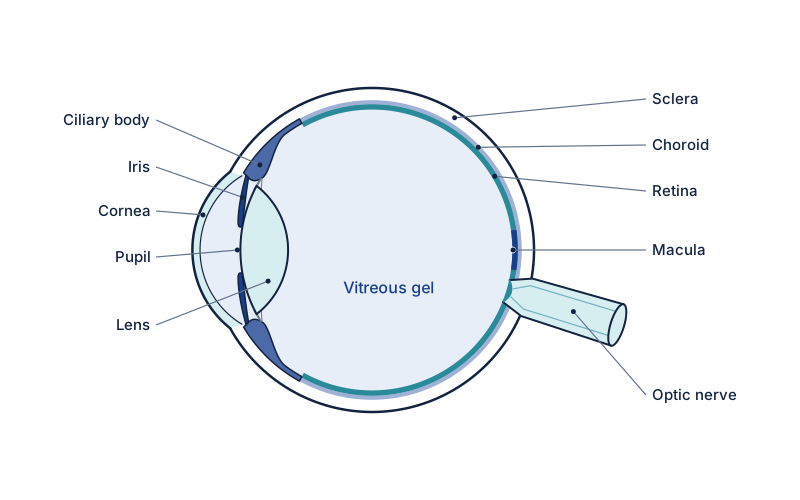
An epiretinal membrane (also called a macular pucker or cellophane maculopathy) is a thin sheet of fibrous tissue that forms on the inner surface of the retina at the macula, the central area responsible for sharp vision. As it contracts, it can wrinkle the retina and cause blurred or wavy central vision. Most are mild and need no treatment.
What is Epiretinal Membrane (Macular Pucker)?
An epiretinal membrane (ERM), also known as a macular pucker or cellophane maculopathy, is a thin sheet of fibrous tissue that forms on the inner surface of the retina at the macula — the central part responsible for detailed, sharp vision. As the membrane contracts, it can wrinkle or distort the underlying retinal tissue, causing blurred or wavy central vision. Epiretinal membranes are common, particularly in people over 50, and most are mild enough to require no treatment.
What are the symptoms of Epiretinal Membrane (Macular Pucker)?
- Blurred or hazy central vision
- Metamorphopsia — straight lines appearing wavy or distorted
- Objects appearing larger in one eye than the other (macropsia)
- Difficulty reading small print
- A grey or blurred patch in the central field
What causes Epiretinal Membrane (Macular Pucker)?
- Idiopathic (most common) — age-related changes following posterior vitreous detachment
- Retinal tear or detachment
- Diabetic retinopathy
- Retinal vein occlusion
- Uveitis (eye inflammation)
- Previous eye surgery
How is Epiretinal Membrane (Macular Pucker) diagnosed?
Optical coherence tomography (OCT) is the key investigation — it provides detailed cross-sectional imaging of the retinal layers and quantifies the degree of retinal distortion. Fundus photography documents the extent of the membrane.
How is Epiretinal Membrane (Macular Pucker) treated?
Mild ERM with minimal symptoms is observed with regular OCT monitoring. When vision is significantly affected, vitrectomy surgery — a microsurgical procedure to remove the vitreous gel and peel the membrane from the retinal surface — can improve or stabilise vision in the majority of patients.
How is this managed in Yorkshire?
Mild membranes are often watched. If cataract is also present, sequence the retina opinion first. Huddersfield and Halifax patients still travel to a VR service when surgery is needed.
Frequently asked questions
What are the main symptoms of an epiretinal membrane?
Common symptoms include blurred or hazy central vision and metamorphopsia, where straight lines appear wavy or distorted. Some people notice objects looking larger in one eye (macropsia), difficulty reading small print, or a grey or blurred patch in the central field of vision. Many mild membranes cause few or no symptoms.
What causes an epiretinal membrane to form?
Most epiretinal membranes are idiopathic, arising from age-related changes following posterior vitreous detachment. Other causes include retinal tear or detachment, diabetic retinopathy, retinal vein occlusion, uveitis (eye inflammation), and previous eye surgery. Because they are linked to ageing, they are particularly common in people over 50.
How is an epiretinal membrane diagnosed and treated?
Optical coherence tomography (OCT) is the key investigation, providing detailed cross-sectional images of the retinal layers and measuring distortion, while fundus photography documents the membrane. Mild cases with minimal symptoms are monitored with regular OCT. When vision is significantly affected, vitrectomy surgery to peel the membrane can improve or stabilise vision in most patients.
Book a Consultation
Ask Spire Elland Hospital about current private consultation availability. A GP referral is not required for self-pay.
Book at Spire Elland ↗ Call 01422 324000Routine consultation suitable
Related conditions
Self-Assessment Tool
Not sure if you need to be seen? Take our symptom checker.
Start self-assessment →