Quick answer
A paediatric ophthalmologist is a medically qualified eye surgeon with additional specialist training in diagnosing and managing eye conditions in infants, children and young people. They treat squint, amblyopia (lazy eye), childhood cataracts, nystagmus and more. Children are not simply small adults when it comes to eye disease, so this specialist expertise matters.
On this page
A paediatric ophthalmologist is a medically qualified eye surgeon who has completed additional specialist training in the diagnosis and management of eye conditions in infants, children and young people. The distinction from a general ophthalmologist — or from an orthoptist — matters, because children are not simply small adults when it comes to eye disease.
Key facts at a glance
- Treats squint, amblyopia, childhood cataracts, nystagmus and ptosis
- Unlike an orthoptist, can also perform surgical correction
- See one for any suspected squint after 3-4 months of age
- White reflex (leukocoria) in the pupil is always urgent
- Mr Mohyudin is double fellowship trained in paediatrics and oculoplastics
- Private consultations typically available within 1-2 weeks
What does a paediatric ophthalmologist treat?
- Squint (strabismus) — assessment, non-surgical management (glasses, patching) and surgical correction in both children and adults
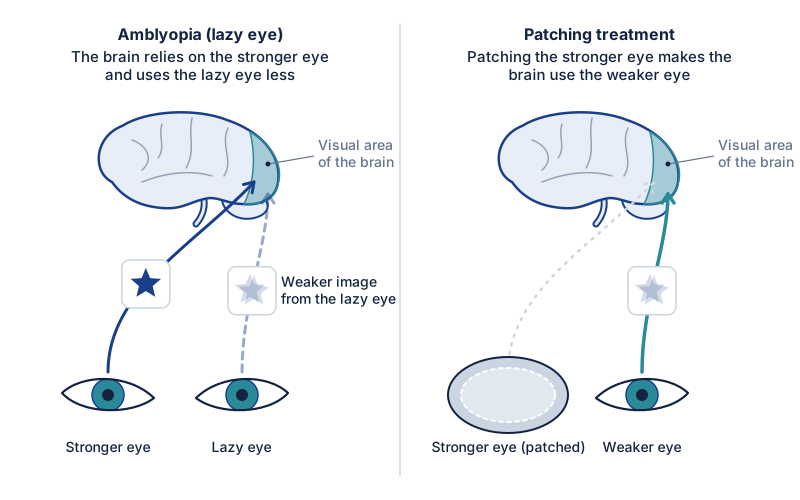
- Amblyopia (lazy eye) — diagnosis and treatment during the critical visual development window
- Refractive errors in children — prescribing glasses for hyperopia, myopia and astigmatism, including management of myopia progression
- Childhood cataracts — rare but requiring prompt surgical treatment to prevent amblyopia
- Nystagmus — involuntary eye movements present from birth or early childhood
- Ptosis (drooping eyelid) in children — assessment of amblyopia risk and surgical timing
- Nasolacrimal duct obstruction (blocked tear ducts) — conservative management and surgical probing
- Retinopathy of prematurity (ROP) — screening and treatment in premature infants
- Neurological visual impairment — assessment of children with known brain injuries or developmental delay
How is a paediatric ophthalmologist different from an orthoptist?
An orthoptist is an allied health professional specialising in the assessment and non-surgical management of eye movement disorders and amblyopia. They are highly skilled at measuring squint, assessing binocular vision, and supervising patching therapy. They work closely with paediatric ophthalmologists and are often the first specialist a child sees after GP referral.
A paediatric ophthalmologist is a medical doctor (surgeon) who can do everything an orthoptist does, plus perform the surgical correction of squint and other structural conditions. For children who need surgery, or where the diagnosis is complex, a paediatric ophthalmologist is required.
When should my child see a paediatric ophthalmologist?
- Any visible or suspected squint after 3–4 months of age
- A failed vision screening at any age
- Family history of squint, amblyopia, high glasses prescription, or childhood cataract
- Any white reflex (leukocoria) visible in the pupil — always urgent
- Drooping upper eyelid that covers part of the pupil
- Persistent watering and discharge not resolved by 12–15 months
- A child who protests strongly when one eye is covered
- Nystagmus (wobbling eyes) at any age
- Following an abnormal red reflex on the GP's 6-week baby check
Mr Mohyudin's paediatric ophthalmology practice
Mr Mohamed Mohyudin is double fellowship trained, with specialist fellowships in both paediatric ophthalmology and oculoplastics. In his NHS practice at Calderdale and Huddersfield NHS Trust, he manages complex paediatric cases and surgical lists for strabismus correction. Private paediatric consultations are available at Spire Elland Hospital (Halifax) and through Newmedica (Bradford and Huddersfield).
Waiting times for NHS paediatric ophthalmology can be lengthy. Private consultations are typically available within 1–2 weeks — important where the window for amblyopia treatment is time-sensitive.
Who should skip a private paediatric booking?
Skip private care if NHS orthoptic follow-up is already working and there is no surgical question. Skip treating a ‘tiny intermittent squint’ in a baby under three months as an emergency — but do not skip a white pupil, a constant squint after four months, or a child who always objects to one eye being covered. Private speed is for access, not because NHS paediatric teams cannot treat amblyopia. They can, and they do.
Where do Yorkshire families actually attend?
Spire Elland Hospital, Elland Lane, HX5 9EB — about 10 minutes from Huddersfield and Halifax, 20 from Bradford, 25 from Leeds, with free parking. Newmedica in Cleckheaton is often easier for Bradford and Heavy Woollen families for the first look. Surgery, when needed, is on a paediatric list with general anaesthetic. Call Spire 01422 324000 or Newmedica 01274 940 519.
How is a private paediatric visit different from school screening?
School-entry screening is a filter. It is not a cycloplegic refraction, an orthoptic work-up, or a dilated retina exam. A fail, a family history, or a parent who can see a turn should not wait for the next school round. A pass does not cancel a visible squint at home. Private care buys a sooner consultant and orthoptic-level look; it does not buy a different set of physics for how amblyopia is treated.
What happens at the first visit with Mr Mohyudin?
History from you, vision with age-appropriate tests, cover tests, and usually drops to relax focusing so the true glasses prescription can be measured. Bring previous glasses, school letters, and a phone photo of the red reflex if you are worried. Surgery is not decided from the waiting-room photograph. If the child needs an operation, it is listed with paediatric anaesthetic support, not squeezed onto an adult local list.
What should parents leave the first specialist appointment knowing?
Ask for the findings in plain language: how well each eye sees, whether glasses are needed, whether the eyes work together and whether the eye itself is healthy. Those are separate questions. A child who recognises small objects may still need treatment for a difference between the eyes. If the examination is incomplete, ask what could not be measured and how the team plans to complete it.
A treatment plan should be workable for the whole family. Discuss school, childcare, sensory needs and any previous difficulty using glasses, patches or drops. Ask who you can contact if the plan proves difficult instead of waiting until the next appointment. Keep the prescription, report and follow-up date together. If another professional is involved, such as an orthoptist, clarify who is coordinating the care so that an important review is not missed.
Questions to take to your appointment
- What do we know about vision in each eye?
- Which parts of the assessment need repeating?
- Who can help if my child struggles with the treatment plan?
Frequently Asked Questions
My GP referred my child to an orthoptist, not an ophthalmologist. Is that correct?
For most straightforward squint and amblyopia referrals, an orthoptist-led service is appropriate and highly effective. The orthoptist will escalate to a paediatric ophthalmologist if surgery is needed, if the diagnosis is complex, or if there are additional concerns. If you feel your child needs a consultant ophthalmologist assessment sooner, a private referral can be arranged directly.
How quickly should a squint in a child be assessed?
The sooner the better. Visual development is most plastic in the first 2–3 years and the window for amblyopia treatment is most effective before age 7–8. Any constant squint (as opposed to very intermittent) in a child under school age should ideally be assessed within 2–4 weeks. If there is any associated reduction in vision or an abnormal red reflex, referral should be urgent.
Will my child need to be dilated?
Often yes. Cycloplegic drops sting briefly and blur near vision for hours. They are how we stop a child’s strong focusing from hiding long-sight, which is a common cause of squint and amblyopia. Arrange the rest of the day accordingly.
Can I use private insurance for a child’s squint?
Many UK policies cover medically indicated paediatric ophthalmology. Check paediatric exclusions and get pre-authorisation. Self-pay consultations are also available without a GP letter.
Sources & further reading
Patient information and guidance supporting this topic. Your own clinical team’s advice takes priority over a general guide.

Mr Mohamed Mohyudin
MBChB BSc MSc FRCOphth CCT — Consultant Ophthalmic Surgeon, Spire Elland Hospital, Yorkshire. GMC 7039600. Humanitarian cataract surgery in Karachi and Islamabad: World Aid Network.
View full credentials →