Quick answer
YAG laser capsulotomy is a quick, painless outpatient procedure that treats posterior capsule opacification (PCO), the cloudy vision that can return months or years after cataract surgery. A laser creates a small opening in the hazy capsule behind the lens implant. Most patients notice improved vision within 24 hours, and treatment is permanent.
On this page
Approximately 20–30% of patients who have cataract surgery will develop posterior capsule opacification (PCO) within 2–5 years. This happens when cells from the old lens gradually migrate and proliferate on the back of the capsule — the thin membrane that was left in place during cataract surgery to support the new implant. The result is exactly the same as cataract: gradually blurring, glare, and reduced contrast sensitivity. The good news is that treatment is quick, painless, and performed as an outpatient in a single visit.
Key facts at a glance
- PCO affects around 20-30% of patients within 2-5 years of cataract surgery
- YAG capsulotomy is a painless outpatient procedure done in a single visit
- The laser opening takes just a few minutes to create
- Most patients notice improved vision within 24 hours
- It is a one-time, permanent treatment that does not need repeating
- Avoid driving on the day of treatment due to dilating drops
What is posterior capsule opacification?
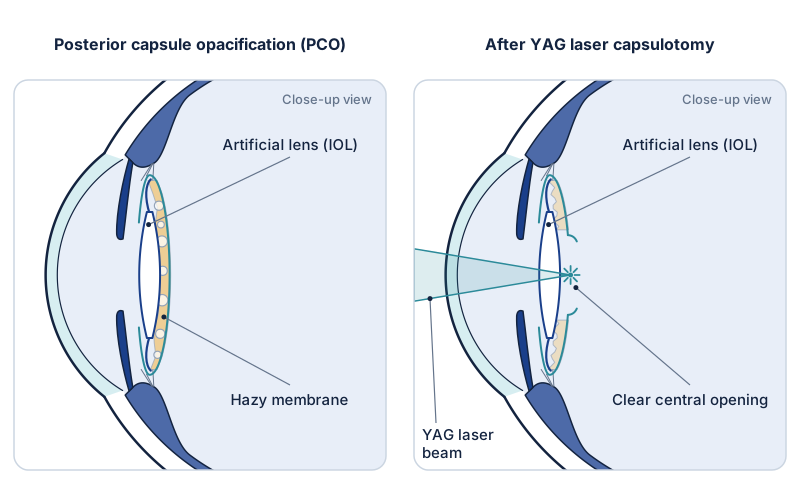
During modern cataract surgery (phacoemulsification), the cloudy lens is removed but its capsule — an extremely thin membrane — is left intact. This capsule cradles the new intraocular lens implant in its correct position.
Over the months or years following surgery, residual epithelial cells can multiply on the back surface of this capsule, causing it to become hazy or wrinkled. This is PCO, sometimes called 'secondary cataract' (a slight misnomer, as the original cataract cannot return once the lens has been removed).
Symptoms
- Gradual blurring of vision — may feel like the cataract has come back
- Glare and halos around lights, particularly at night
- Reduced contrast and colour vibrancy
- Difficulty reading or with fine detail work
The YAG laser capsulotomy procedure
Treatment is YAG (yttrium-aluminium-garnet) laser capsulotomy — a quick, painless outpatient procedure performed in the clinic.
- Dilating drops are applied to widen the pupil.
- You sit at a slit lamp; a contact lens is placed on the eye to focus the laser.
- The laser creates a small, precise opening in the central posterior capsule — taking just a few minutes.
- The procedure is completely painless. You may see flashes of light and hear clicking sounds.
- Most patients notice improved vision within 24 hours. Final visual improvement is usually apparent within a few days.
After the procedure
- You will be asked to wait 30–60 minutes post-procedure to have your eye pressure checked (a small IOP rise is the most common side effect and is usually temporary).
- Avoid driving on the day of treatment due to dilating drops.
- Most patients return to normal activities the following day.
- Anti-inflammatory drops are sometimes prescribed for a few days.
How long does the improvement last?
YAG capsulotomy is a one-time, permanent treatment. The opening created in the capsule does not close. Once done, PCO does not recur at the treated site and the procedure does not need to be repeated.
How much does private YAG laser cost in Yorkshire?
With Mr Mohyudin at Spire Elland, YAG capsulotomy starts from £500 per eye (July 2026). It is not bundled into the original cataract package. If your cataract was NHS, YAG should usually be available on the NHS; private care is for speed or if you had surgery elsewhere and want a named consultant. Do not pay privately for YAG because a website implied the cataract ‘came back’ — PCO is a capsule problem, and the implant stays.
Who should skip a private YAG booking?
Skip it if vision is reduced for another reason (macular disease, uncorrected glasses, corneal haze) until that is checked. Skip driving yourself on the day because of dilating drops. Report new flashes, a shower of floaters or a curtain after YAG as you would after any cataract pathway — retinal detachment is uncommon but not a reason to hide the risk.
When is YAG laser the wrong next step?
If a dilated exam and, when needed, an OCT show macular oedema, an epiretinal membrane, or wet AMD, opening the capsule will not restore that vision and can complicate later retina treatment. If you are still in the first weeks after cataract surgery, some haze is corneal swelling or drops — not automatically PCO. YAG is for a cloudy capsule behind a well-centred implant, confirmed at the slit lamp.
Does lens type change the YAG conversation?
Multifocal and EDOF implants can make PCO more noticeable because the optic already splits light. That does not mean every premium-lens patient should have early YAG. It does mean the capsule should be examined before anyone blames the lens choice. After YAG, some measurements for later surgery change — tell any future surgeon you have had it.
If the original cataract was NHS, should YAG be NHS too?
Usually yes. Posterior capsule opacification after NHS cataract surgery is part of the same disease pathway. Private YAG (from £500 per eye at Spire Elland, July 2026) is for speed, for surgery done elsewhere, or for a named consultant. It is not because the NHS ‘does not do YAG’.
What should be confirmed before treating blur with YAG laser?
Ask the clinician to explain why posterior capsule opacification is the likely cause of your symptoms. Blur after cataract surgery can have other explanations, so the decision should follow an examination rather than an assumption that the cataract has returned. Bring the date of the original operation, information about the implanted lens and any letters describing other eye conditions.
Before treatment, discuss the expected improvement, relevant risks and whether any pressure check or follow-up is planned. Ask how the drops may affect travel home and when you can resume driving. New flashes, a marked increase in floaters, a shadow or sudden loss of vision after treatment need urgent advice. If the original surgery was NHS-funded, ask the original provider about the NHS follow-up route as well as considering a private consultation.
Questions to take to your appointment
- Is capsule clouding the main cause of my reduced vision?
- Do I need an eye-pressure check afterwards?
- What is the urgent contact route after treatment?
Frequently Asked Questions
Is YAG laser capsulotomy covered by the NHS?
If your original cataract surgery was performed on the NHS, YAG capsulotomy for the resulting PCO should be available on the NHS. If your cataract was performed privately, the YAG procedure is typically covered as part of the surgical aftercare by your surgeon's practice. Standalone private YAG capsulotomy is also available for patients who had their original surgery elsewhere.
How soon after YAG capsulotomy will my vision improve?
Most patients notice improvement within 24 hours. If vision does not improve as expected within a week, follow-up with your surgeon is worthwhile to ensure there are no other contributing factors (such as macular disease or dry eye).
Can YAG capsulotomy cause retinal detachment?
A small increase in lifetime retinal detachment risk following YAG capsulotomy has been documented in the literature — roughly a 0.1–1% additional risk. This risk is higher in patients who are very short-sighted (high myopes). Your surgeon will discuss this with you and advise you to report any new floaters, flashes or visual shadow promptly after the procedure.
How soon after cataract surgery can I have YAG?
When the capsule is actually opacified and the eye is otherwise quiet — often months or years later, sometimes sooner. There is no prize for doing it at a fixed week. Your surgeon will look, not count calendar pages alone.
Will I need new glasses after YAG?
Sometimes a small prescription change shows up once the capsule is clear. Do not buy expensive varifocals the afternoon of the laser; wait until the dilating drops have worn off and the surface has settled.
Sources & further reading
Patient information and guidance supporting this topic. Your own clinical team’s advice takes priority over a general guide.

Mr Mohamed Mohyudin
MBChB BSc MSc FRCOphth CCT — Consultant Ophthalmic Surgeon, Spire Elland Hospital, Yorkshire. GMC 7039600. Humanitarian cataract surgery in Karachi and Islamabad: World Aid Network.
View full credentials →